homeschooldrama.com blog
How to Direct a Play
After you have posted the roles, it’s important to put out the rehearsal schedule so everyone knows the expectations. Good communication is key to making sure you put on a good show.
In my twenty years of homeschooling, I have enjoyed directing numerous plays with my kids and our fellow homeschoolers and want to share what I’ve learned and continue to learn with you.
Sample Rehearsal Schedule
This is an example of what a rehearsal schedule could look like each week for a semester:
Auditions
Read through whole play
Blocking (learn different stage terms – upstage, downstage, etc.)
Complete run-through (blocking, interacting with other characters) - assign them to memorize all lines by week 6
Character development (The second you step on the stage, you are that character until you leave. How does the character speak, walk, react?)
Off-book run through; brainstorm set design ideas, if time allows
Run-through on stage, if possible (if not, tape off room to duplicate stage)
Set design and any costume help
Full run-through
Technical rehearsal (need people helping with sound and lights, if any)
Dress rehearsal
Performance
For more details on each of these steps check out How to Direct a Play - a step-by-step guide!
How Much Help Do You Need?
When directing a play, it is helpful to have others that are willing to give of their time and talent to the production. You may have an assistant with you at every rehearsal; while others will help when it’s time to build sets, make costumes and props, handle the sound or hand out programs at the show. The earlier you recruit help, the easier it will be for you to smoothly transition from one aspect of the show to another. If you don’t have a lot of help from parents, then lean on the older students involved or older siblings to give of their time and be a part of the production. Some of my best ideas and help came from students.
I have enjoyed having someone work alongside me during rehearsals to help organize the kids, give feedback and to be where I can’t because I can’t be everywhere. 😉
First Read-Through and Rehearsal Strategies
The first rehearsal is pretty simple since there is not a lot of movement as the kids are just reading through the entire script for the first time. This is called the first read-through and is a way for the whole cast to get to know who is playing which role and to understand the flow of the story they are about to tell on stage.
When I was a part of a large co-op once a week and multiple classes were involved in our play, I had to split the script so that each class could practice with their fellow students on the scene or scenes they were assigned because we had rehearsals during class time, not after school. In this situation it was necessary to have the help of multiple teachers to be a part of the process. Some classes were actual drama classes, like the two classes I was teaching; while others were Spanish and art, for example. My classes were assigned the major roles because they were older elementary students, and they had the most time to rehearse; while the younger students attended their classes as normal until it was time to practice their short parts and join us for a full rehearsal.
There is a point where you will have them all come together as there may be an occasional overlap and the whole play will need to be rehearsed, but for the most part you can keep it simple by focusing on certain scenes with certain classes.
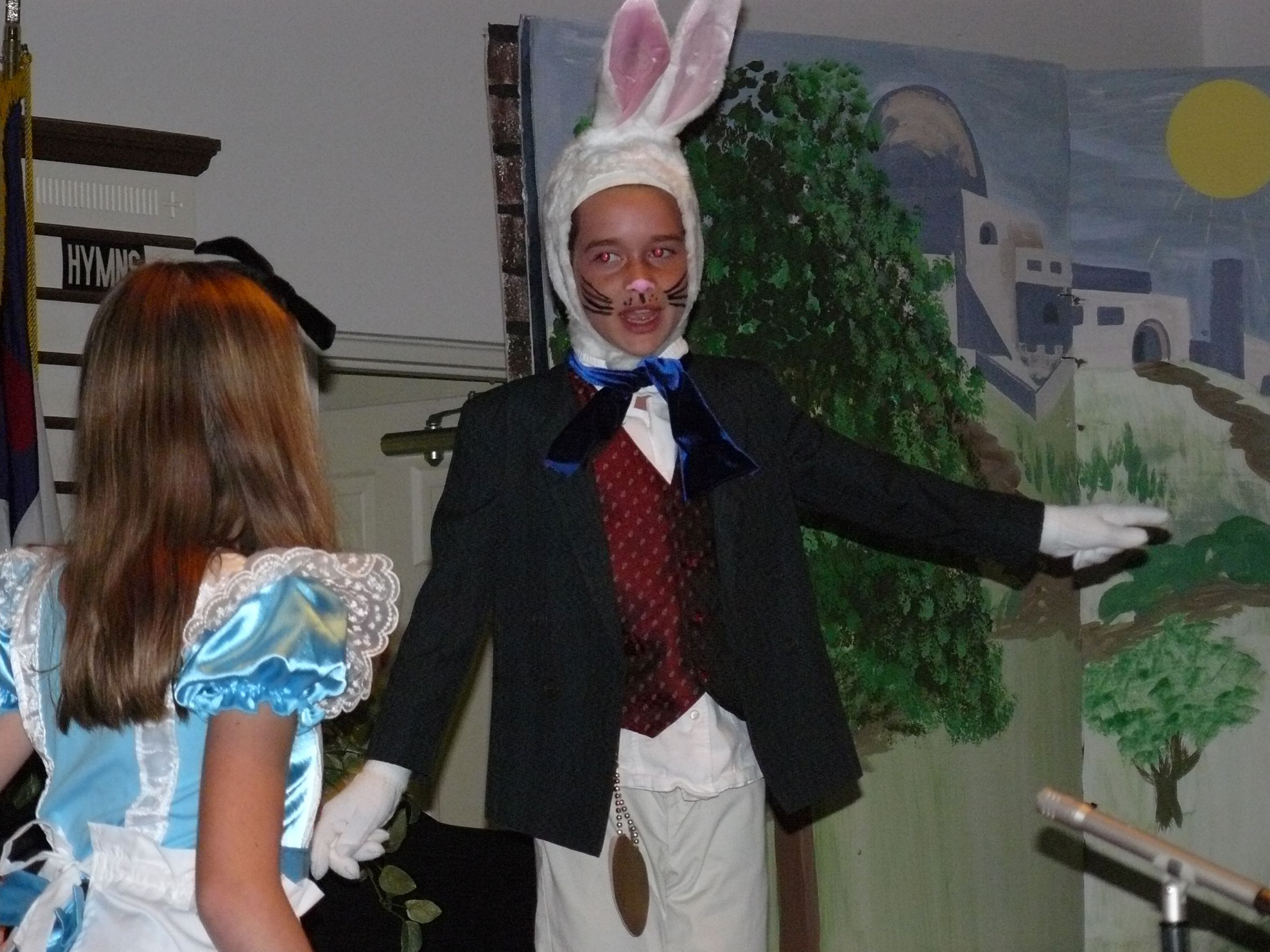
When we did Alice’s Adventures in Wonderland, I had two Alices and two White Rabbits. The first of each acted in the first half of the play, then the second of each acted in the second half of the play. This worked well because I had the older students acting in the first half of the play, while the younger students were in the second half. Therefore, Alice did not have to join the other classes for rehearsals. Since Alice visits different people throughout her travels you don’t have to worry about a lot of overlap in characters either. That’s why it was easy to split the play. The youngest kids added the cute factor by performing some of the small animal parts which only had a line a piece. That way they could practice on their own and just join rehearsals towards the end of the semester.
In another play the entire co-op was involved from Pre-K to middle school. This time I did not duplicate the roles, but strategically assigned roles trying the best I could to keep classes in the same scenes together. The three main characters were in two different classes, so they would need some extra time to practice, but for the most part, the classes could work on their separate scenes until we came together midway through the semester.
The younger students again were smaller parts like baby spiders or random animals singing a farm song, so they could still practice on their own until closer to the end. We chose to have the baby spiders speak Spanish since they were taking a Spanish class, so this was a fun addition for us and the native Spanish speaking families in the audience, and a way for the kids to show off their new language skills.
In both of these situations the first read-through was done in the individual classes with the actors of each class reading only the scenes they were a part of. With the older students we discussed the flow of the entire play and the scenes that were missing, so they could fill in the pieces, but for the most part they only had to focus on their scenes.
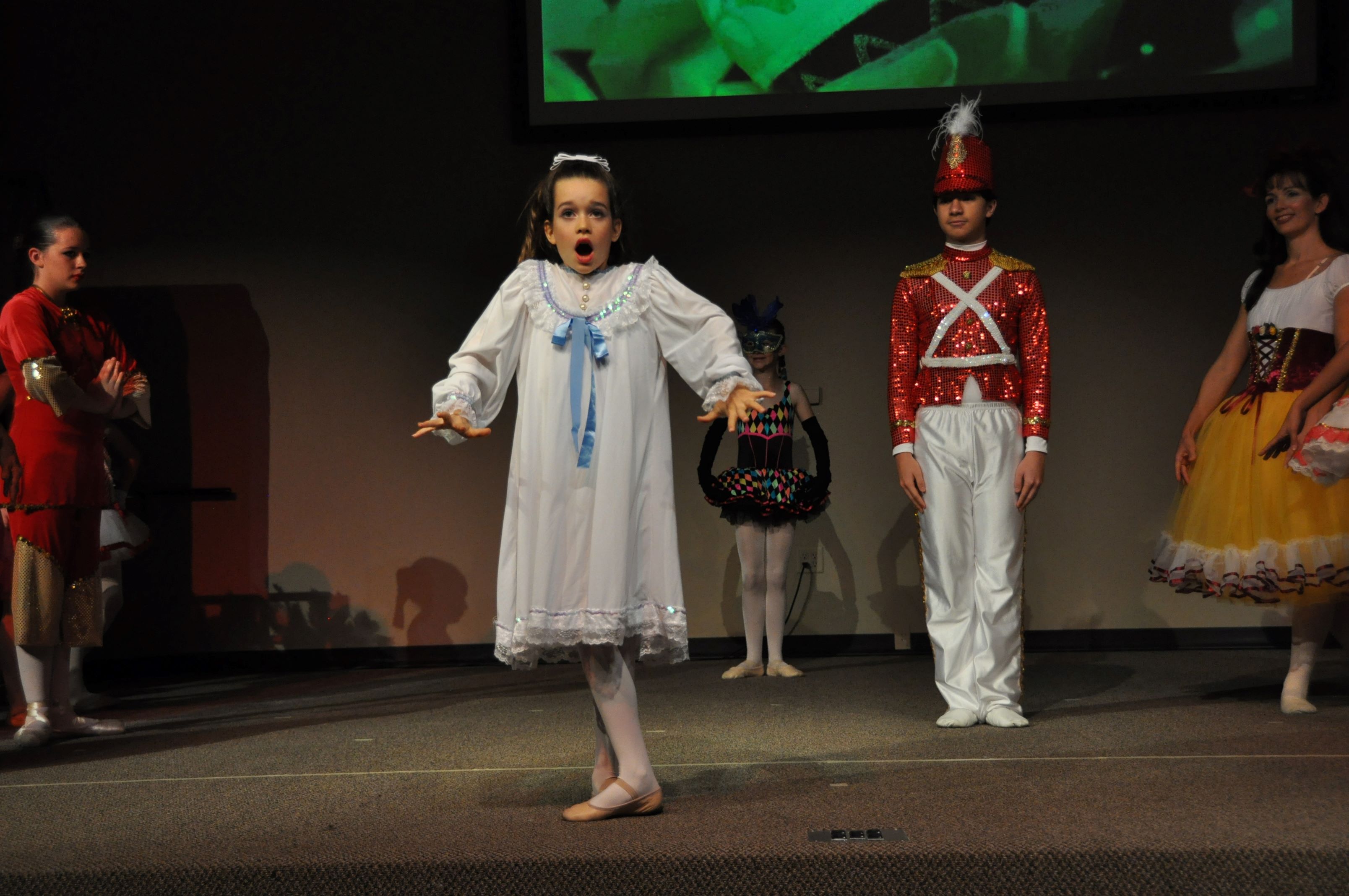
When my daughter performed ballet it was the same way. She only attended her individual classes and learned the dances her classes were a part of, then when it was time for rehearsal week on stage before the big performance, they were able to watch the other parts of the ballet and go up on stage for their dances. When my daughter was Clara in The Nutcracker, then she had to make appearances in other classes to practice with them. Most dancers didn’t have to worry about that though.
When the read-through is over allow time for the actors to ask questions then cast a vision for what rehearsals will look like and the goal for the final performance. Then take it one week at a time and enjoy the process!!!
You Can Direct a Play with Some Help and a Good Plan
Remember, with some help and a rehearsal schedule, you can direct a play. Whether you have parents helping, fellow teachers or the older students, you can put on a great performance. If you don’t have a lot of help, then consider a smaller production. The biggest thing is to give your students an opportunity to perform. It doesn’t have to be big to be a great experience.
Want to make life easier and be the first to know when the next blog is posted? Sign up below for our email newsletter to get the latest news!
If you’re looking for a play to perform, check out these plays! If you want more detailed instructions on how to direct a play, check out How to Direct a Play - a step-by-step guide!
Thanks for joining us!
Danielle at homeschooldrama.com