homeschooldrama.com blog
How to Fit Drama into Your Homeschool
Did you know that middle school students can enjoy some of the greatest literature of all time right at their fingertips? I recently found a list online of the top 100 books on the public domain. As I read through the list, I realized how many of the books from that list my kids enjoyed reading and how much fun it is to add drama to these stories so they can dig deeper in understanding and use their creativity.
Hi! My name is Danielle and I have homeschooled my kids from Pre-K through high school. We have found a lot of creative ways to fit drama into our homeschool, and now I want to share what I’ve learned and continue to learn with you.
Before we get into specific examples of how to get your student excited about reading great literature with drama, here is what I will show you in Part 1 of this series:
reasons why it's important to read great literature with your middle school students
why adding drama to your literature reading can enhance understanding and creativity
a list of great literature you can access right now
In Part 2, I will give you concrete examples to use with some of the classics on this list.

Yes, even in middle school you can read with your kids. There’s something about that time together when you’re reading a story. Everyone is a part of the adventure. In fact, make it a whole family adventure and read books together as a family.
My son, who is younger, was exposed to all the books his older sister was reading before he was “assigned” them for school. Once he got to middle school, he had an even deeper understanding of the books due to maturity and another read-through.
When I led middle school students at our homeschool group, I would read all the books to be able to have deeper discussions with them. (Reading summaries is not enough! 😉) From reading them I knew there were more details they could pull out when discussing the actions of the characters in the story. If I led a class again another year, I read each book again. It kept it fresh in my mind for discussion and gave me new insights into the book as I was exposed to it again.
I learned that reading the books helped me better understand what my kids were reading and learning. This helped me in class and at home with my own kids.
Now I know many will argue that they have multiple aged kids and it’s hard to read all the books they are reading. I would agree that is very hard to do, BUT you can and should at least read the books of your oldest student. If you do that, then once your other children get to that age, you will be familiar with the stories they are reading if you are not able to read them again. If you can’t read every book then read every other, or consider the books you know they will be writing papers on or have more challenging themes that would be important to discuss. It's another good excuse to read as a family so everyone is involved.
In middle school, kids love to ask questions. Sometimes it can seem annoying to parents or parents feel ill-equipped to answer these questions. However, questions are so important. It helps kids dig deeper into topics they don’t understand. It creates a relationship between parents and their children where questioning is acceptable, and the house is full of quality discussions around the dinner table.
If they aren’t asking you, then they are asking their peers. Some topics may be okay for that, but many during this time of their life are not. You want them to feel open enough to ask the questions they have on their mind. You want them to know it is a safe place to question, and you want them to learn it’s okay not to have all the answers. Asking questions helps everyone learn and find the answers they are looking for.
These questions can lead to great debates. What should the character have done, or what could’ve happened if the character did…? There is a lot to learn through the characters of a great literature book.
In middle school we would read literature then debate whether a character should have done a particular action. My kids had to think about the positives and negatives of that choice and determine if the actions were good or if another choice could or should’ve been made.
This is where mock trials took debate to another level.
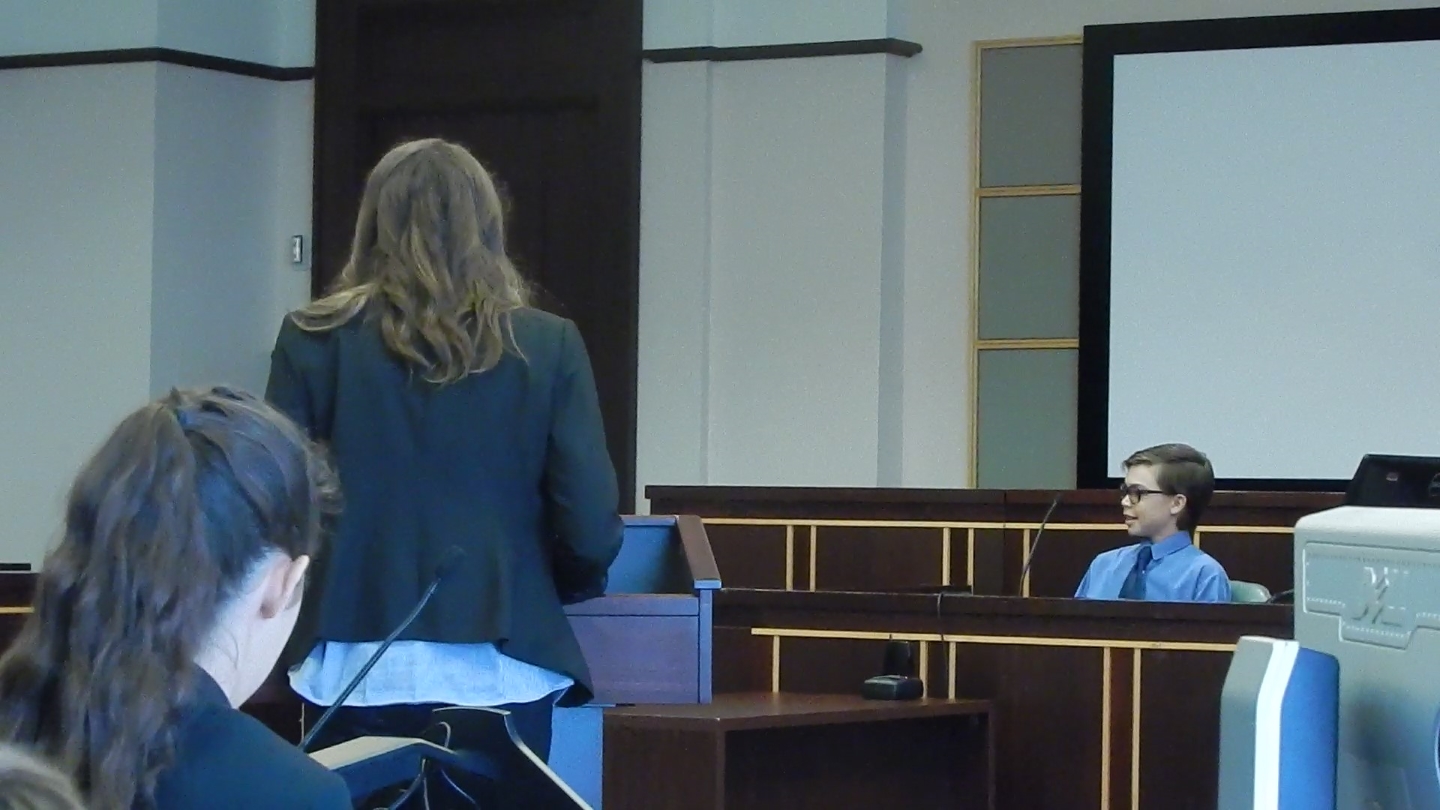
When my kids were in 8th grade, they each did a formal mock trial. They went from not knowing anything about trials and courtrooms, to defending a case against another team in front of a real judge in a real courtroom with a jury. While a formal mock trial is a great experience, putting a character on trial from great literature is a lot of fun and can have many of the same benefits. (Check out this mock trial drama curriculum!)
As students get older, the literature they are reading gets more challenging with more vocabulary and complex themes. Your student could be an exceptional reader up until this point, but then feels lost, or you notice they just don’t seem to be understanding what they are reading.
My daughter read so many books when she was young, she learned how to skim and speed read. This allowed her time to read a lot of books, but as she got into the more challenging books, this method did not help her comprehension. My son often sped through as well and experienced the same challenges, missing major points in the story.
When doing a mock trial from literature, it forces the student to slow down and really look at the details of the book as it applies to the case.
While playing a character in a mock trial as a witness, students start to think about what the character is like and how they walk, talk and interact with others. They also start to consider the actions that the character makes and whether or not those are good choices, or another choice could have been made.
Many kids really get into their roles during a mock trial as if they were performing a play. As attorneys they consider how to present themselves, while as witnesses they consider how to answer like the character would answer the question. (see Part 2 for more specific examples)
From the list of best books of all time on the public domain (from shortform.com), I’ve chosen some and broken them down into elementary, middle school and high school (we will cover them all in this series of blogs).
Here’s the list for middle school students:
The Complete Grimm’s Fairy Tales by Jacob and Wilhelm Grimm (Elem/MS)
Jane Eyre – Charlotte Bronte (MS/HS)
Little Women – Louisa May Alcott (MS/HS)
A Christmas Carol by Charles Dickens (MS/HS)
Don Quixote by Miguel de Cervantes, Edith Grossman-English translation (MS/HS)
The Wonderful Wizard of Oz by L. Frank Baum (MS)
Treasure Island by Robert Louis Stevenson (MS/HS)
The Adventures of Tom Sawyer by Mark Twain and Scott McKowen (MS)
The Adventures of Sherlock Holmes by Sir Arthur Conan Doyle (MS)
Gulliver’s Travels by Jonathon Swift (MS/HS)
Robinson Crusoe by Daniel Defoe (MS/HS)
Bible (I’ve added this to the list because there are always wonderful stories to act out in this best-selling book of all time, according to Guinness World Records, which is also available in the public domain.)
Please note that some of the books have an "HS" next to them as well to indicate they are good for high school. In fact, they are great for adults too, so don’t stop reading them because you are no longer in middle school. Students will get something more out of them at each maturity level.
You can get these books for free as an ebook online (Project Gutenberg) or at your local library. My family prefers physical books versus the online option and have found that many of these public domain books are still available in print. We found many of our books at used curriculum sales or from friends who were done homeschooling and ready to get rid of their collection. Grandparents helped add to the collection as well.
You have access for free to some of the greatest books ever written right at your fingertips. You can add value to your child’s education by including drama while reading these great works of art. I will go into more detail with specific examples of how to add drama to some of these classics in Part 2 of Middle School Students Can Enjoy Great Literature with Drama.
Want to make life easier and be the first to know when the next blog is posted? Sign up below for our email newsletter to get the latest news and ideas.
Looking for more ways to add drama to your homeschool? Check out our plays and drama curriculum related to this list of great literature and much more!
Thanks for joining us!
Danielle at homeschooldrama.com
It's easy to get our products in your hands with these downloadable PDFs!