homeschooldrama.com blog
How to Fit Drama into Your Homeschool
I recently saw a debate online about whether Shakespeare should still be read in schools. One of the points made was that it is hard to read and no longer relevant, while another argued that it was meant to be performed, not just read. I think we should stop taking away the hard things and start giving our students opportunities to learn in fun and different ways including adding drama to your homeschool with Shakespeare!
After homeschooling my kids for 20 years, I have learned a lot of creative ways to fit drama into our homeschool and now want to share them with you.
Adding Drama Can Get Your Students Excited About Shakespeare
I do think most kids and parents would not choose to sign up for a Shakespeare class, but that's because they don't think it's possible to enjoy it. I used to be one of those parents. However, done the right way, I've found they actually walk away enjoying it and learning quite a bit from the characters they read and portray. I've had kids still quoting lines from Shakespeare a year later!
There are a lot of lessons that can be learned and a lot of creativity that comes from portraying the roles Shakespeare has created. There's also a lot of connections made to other literature and even movies when you are familiar with Shakespeare's work. Many have built upon what Shakespeare first created.
During my kids’ junior year of high school, they read five different Shakespeare plays. They read comedy, tragedies and historical plays. For each one they had to memorize a certain amount of lines from their favorite scene and perform a solo or duo interpretation. This was always a fun time as the students got really creative on how they wanted to play their roles.
Solo Interpretation of Shakespeare's Plays
For a solo interpretation it can be challenging if there is a lot of dialogue. Some choose to find a monologue or they get creative and play two different roles to demonstrate the conversation that is occurring in the scene. Some students have worn different hats to show which character is speaking. Sometimes they have different props or a different accent for each. Other times they have split their costume, hair and makeup right down the middle and just turned to the side to show which character they were portraying. This role playing also helped them to get into character and remember their lines.
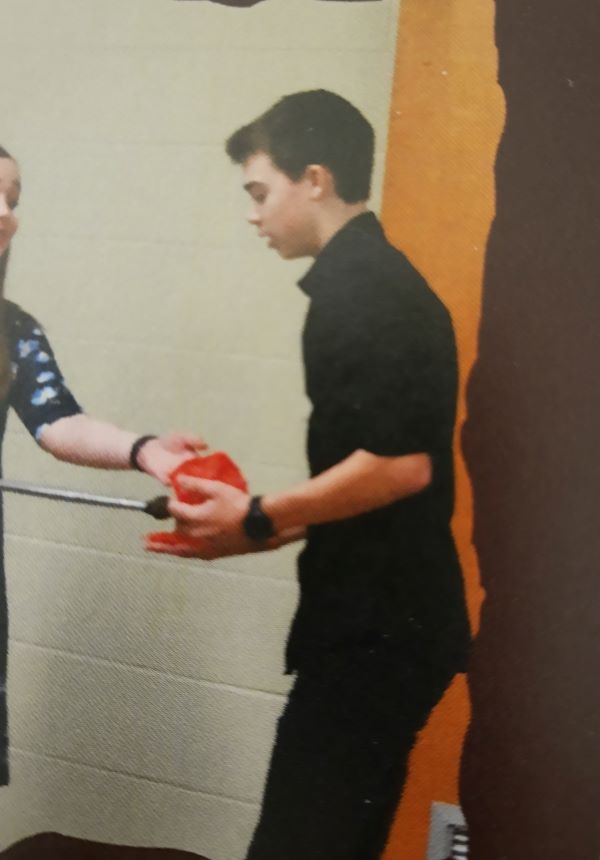
I had one student play three roles one time. Without my students knowing, I decided to surprise them and added a curtain for them to come out from. I just used PVC pipes and curtains from my house to set the scene. “Backstage” was the closet of our classroom. This student did not know that it was going to be there, but immediately used it to his benefit as he would come out the right side as one character, the middle as another and the left side as the third character. He also had a hat and scarf that helped define the roles. He was able to think quickly on his feet and pulled off an entertaining performance.
Duo Interpretation of Shakespeare's Plays
For a duo interpretation, the students get to take turns saying their lines. Sometimes this is easier because one student doesn’t have to continually say line after line by himself. He can use his partner to help him remember what comes next in the dialogue. It’s also fun to practice with someone, and it holds each person accountable to do well not only for himself but also for his partner. Again, costume and props can add to the story or some fun accents. Being creative and thinking how to interpret the piece also helps students remember the lines and the plot of the story.
30-Minute Shakespeare Play
Working as a larger team is another great skill for students to learn. Although we never had time to perform the entire play, we did choose to perform Macbeth in a shorter format. This 30 minute version still used the original language and kept the important plot points to properly tell the tragic story of Macbeth.
Macbeth does have the most lines by far, but each year the actor playing this role managed to do what was necessary to learn them and perform them well. It’s always a wonderful experience to see students stretch themselves to do more than they think they can. Since we only met once a week, doing a shorter version of the play was necessary to not interfere with other subjects the students were studying or to take time away from the next Shakespeare play we planned to study and present.
Since these students were juniors in high school, I gave them full responsibility for making decisions on directing, costumes and props. Without money to spend or a lot of time, it was important to keep it simple. For the first class that performed this play as a team, we were blessed to have watched Macbeth at our local Shakespeare theater and were able to glean some ideas from them since they worked on a small stage with limited actors. They literally changed costumes right in front of our very eyes, and we were able to see them as the new character without ever thinking of the old. No more complicated costumes or scene changes for us to worry about.
Performing in front of our homeschool group allowed the middle school and younger high school students to get excited about Shakespeare and what they would get to do. They got an abbreviated version of the play to understand what the evil witches told Macbeth and how that may have influenced the choices he and his wife made to make their prophecies come to life. They also, like my first class did, got an opportunity to watch how it was performed and use some of those ideas, as well as come up with many of their own, to perform their version when they got to be juniors.
Creativity With Simple Costume and Prop Solutions
Our first year we didn’t worry a lot about costumes because we wanted to keep it simple and it was up to the kids what they wanted to focus on. A couple years later, after the students had watched Macbeth a couple of times, they came up with some really creative ways to differentiate each character, especially if they were playing more than one role.
First, every actor wore black to keep it simple, then added something small to show they were playing a certain role. The witches were completely covered with black table cloths, so that it was even hard to recognize the student with their faces almost covered on each side. They had sticks that they banged on the floor as they entered and exited for some dramatic effect.

King Duncan had a very royal looking crown and robe that had previously been used for a summer camp. In fact, all of the costumes worn were borrowed so that no money was spent for this production. The ghosts had tulle over them to give them the invisible look; while our Ghost of Banquo the first year used a flashlight under his chin to give that spirit effect. The murderer looked like a ninja with only his eyes showing, which effectively communicated his brief role and differentiated the actor from the other role he played.
This class also had a couple of students that made their own weapons which helped represent soldiers and create interest in the fight scenes.
With this abbreviated version of Shakespeare’s play, students are able to stay within the parameters of the normal time we study this play and have an opportunity to perform in front of the middle school and high school students in our homeschool group in the fellowship hall of the church. Each year they do a wonderful job of memorizing their lines, getting into character, and performing the all-important fight scenes.
My daughter’s graduating class loved performing Shakespeare so much they actually performed a few of Shakespeare’s tales at their ceremony to add to their celebration. Since the students were the ones to choose what they performed, this demonstrated how much they enjoyed their time in Shakespeare the year before.

Shakespeare Was Meant to be Performed
It’s fun to play a character, so why not choose to act out Shakespeare instead of just reading it.
Performing Shakespeare can help your student:
Build confidence when speaking in front of other people
Expand their creativity as they consider their character and how to present it
Enjoy Shakespeare the way it was meant to be experienced
Make connections to other literature and movies
Have fun while learning a subject like literature
Looking for more tips on how to direct a play, check out our new series here!
Want to make life easier and be the first to know when the next blog is posted? Sign up below for our email newsletter to get the latest news!
Check out this 30-minute Macbeth play! It can be a fun addition to your class after you read the original or just read this one to expose your students to Shakespeare's work. It is shorter to make it easier to perform with less rehearsals and time spent on it, but still has the original language and important plot points to carry you through Macbeth’s tragic tale.
Want to go beyond the play and put Macbeth on trial? Now you can with our drama curriculum Macbeth - The Mock Trial!
Thanks for joining us!
Danielle at homeschooldrama.com
30-minute play
Don't have a lot of time, but still want to perform Shakespeare? In this shorter version of, students can perform Shakespeare using the original language in less time while still maintaining the important themes and storyline.
You can now perform the Macbeth 30-minute play, plus create a mock trial with this new drama curriculum. That's two products in one for a whole semester of fun!
from a full-length play
Did you ever wish you could use a play, but it was too long or just not right for your group? Using Macbeth by Shakespeare, you can learn how to tweak a play to make it work for your needs?