homeschooldrama.com blog
How to Fit Drama into Your Homeschool
High School is a busy time filled with demands to have the perfect transcript. Drama doesn’t have to be a separate subject because it can be incorporated into most subjects you're already doing. In fact, integrating subjects together is a wonderful idea when teaching high school students because it builds depth in their learning and skills developed. Did I mention Drama can also count as an elective credit. 😉
Hi! My name is Danielle and I have homeschooled my kids from Pre-K through high school and have enjoyed many different ways to fit drama into our homeschool and now want to share what I’ve learned with you.
If this is your first time teaching drama, you might want to start super simple and then build from there. If you have two semesters with your students, then you can assess how things are going and add more for the second semester. We have drama bundles that can simplify your life and help you get started.
Critical thinking skills
Writing skills
Presentation skills
Debate skills
Teamwork
Leadership skills
Don’t have a lot of time for an extra drama class but still want to add drama to your homeschool? Here is a list of subjects we’ll talk about that can be integrated with each other and drama:
Writing
Literature
History
Bible
Art
Even Economics!
For instance,
Say you’re studying British LITERATURE and reading Lewis Carroll’s Alice’s Adventures in Wonderland. You could just read it and discuss it, or you could read it first, then write a playscript based on the original book that is now in the public domain. (It's important to choose books that are no longer under copyright like we have in our How to Write a Playscript curriculum.)
Students learn so many great skills working on a script as they read through the original work and decide what they want to keep and what isn’t important for their story. They can choose their favorite chapters and characters to include in their play. They can choose to use the original language and dialogue that is included in the original work or modernize it. They can add characters that Alice meets along the way or keep the same wacky characters that Mr. Carroll chose to include. There are a lot of decisions that are made while WRITING a playscript and a lot of great skills that are learned while writing, editing and putting it in its proper format.
Through making these decisions, students start to appreciate the story as it was written and what is involved in putting together characters and a storyline that flow well from beginning to end. They learn what dialogue looks like and what’s important to say and what can be left out. They also learn more about each character and how they respond to the people and environment around them.
After writing the play, your student could choose to direct others in performing her play or she could choose to play one of her favorite characters. When directing a play, LEADERSHIP SKILLS are developed, and the importance of TEAMWORK is discovered as every member of the production and acting team have to work together to put on a performance.
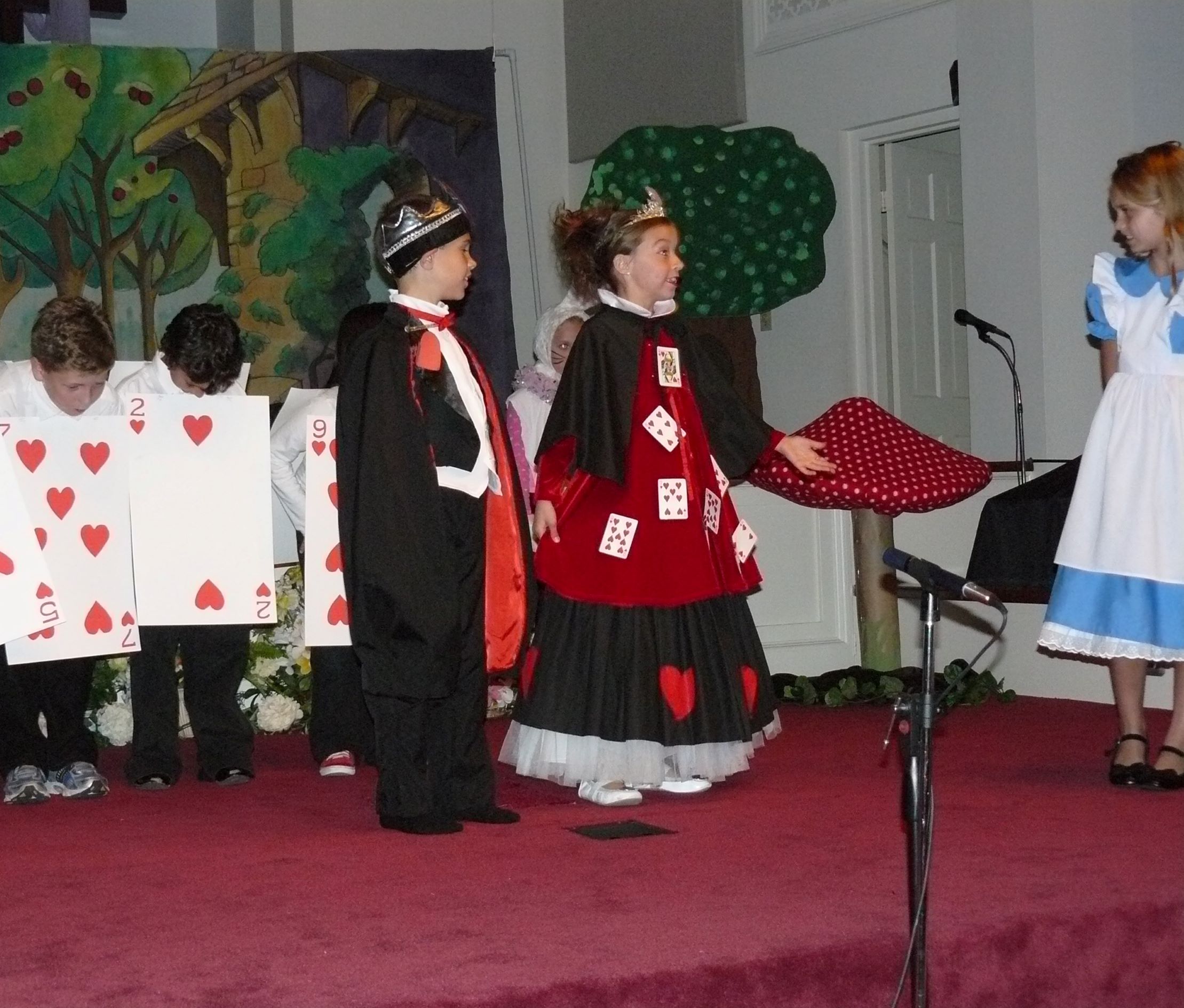
If your student wants to have costumes, props and sets for the play then creativity through ART will be included in this experience. Students can get creative with what they already have to make a great set. It doesn’t have to cost a lot of money to put on a show. If they have some money to spend, they can learn to work within a budget and think through the best way to spend what they have. How can they make a dollar stretch? What??? Did we just include ECONOMICS with drama?! 😃
Your student could also write a play based on something he is studying in HISTORY or from one or more of the many stories in the BIBLE.
To keep with the British Literature theme, you and your students could read Shakespeare’s Macbeth. They could choose to act it out and give their own interpretation of each character or they could choose to put Macbeth on trial for the murder of King Duncan using the facts from the play to create and present the case. They could also do both if you have the time.
Most kids don’t get excited about Shakespeare or presenting a speech in class. Both are great topics to work on in high school but can be a lot more fun if you include drama. Just remember - Shakespeare was meant to be performed!
My son was recently discussing with his buddies from high school what they liked best when they were in class together. They all agreed they loved studying Shakespeare because they got to perform a 30-minute version of Macbeth. As juniors in high school, they were assigned to read Macbeth, discuss it in class and present an interpretation memorizing 30 lines. Instead of having my students present individually or as a duo as they had with other Shakespeare plays, I had them perform a 30-minute version of the Macbeth they were reading.
Because they normally had to work on their own to memorize lines and present their interpretations and we didn’t have time in class (only one day a week), I allowed the students to decide what they wanted to include in their PRESENTATION of the play. The first year, my class decided they didn’t want to focus on costumes. This came after watching Macbeth performed on a small stage at a Shakespeare theater. They learned you can keep it simple and still tell a great story.
I did have two students decide they wanted an epic fight scene between Macbeth and Macduff. They made swords and got together outside of class to rehearse the choreography for their fight scene. It was one of their favorite parts of the play and remembered by all.
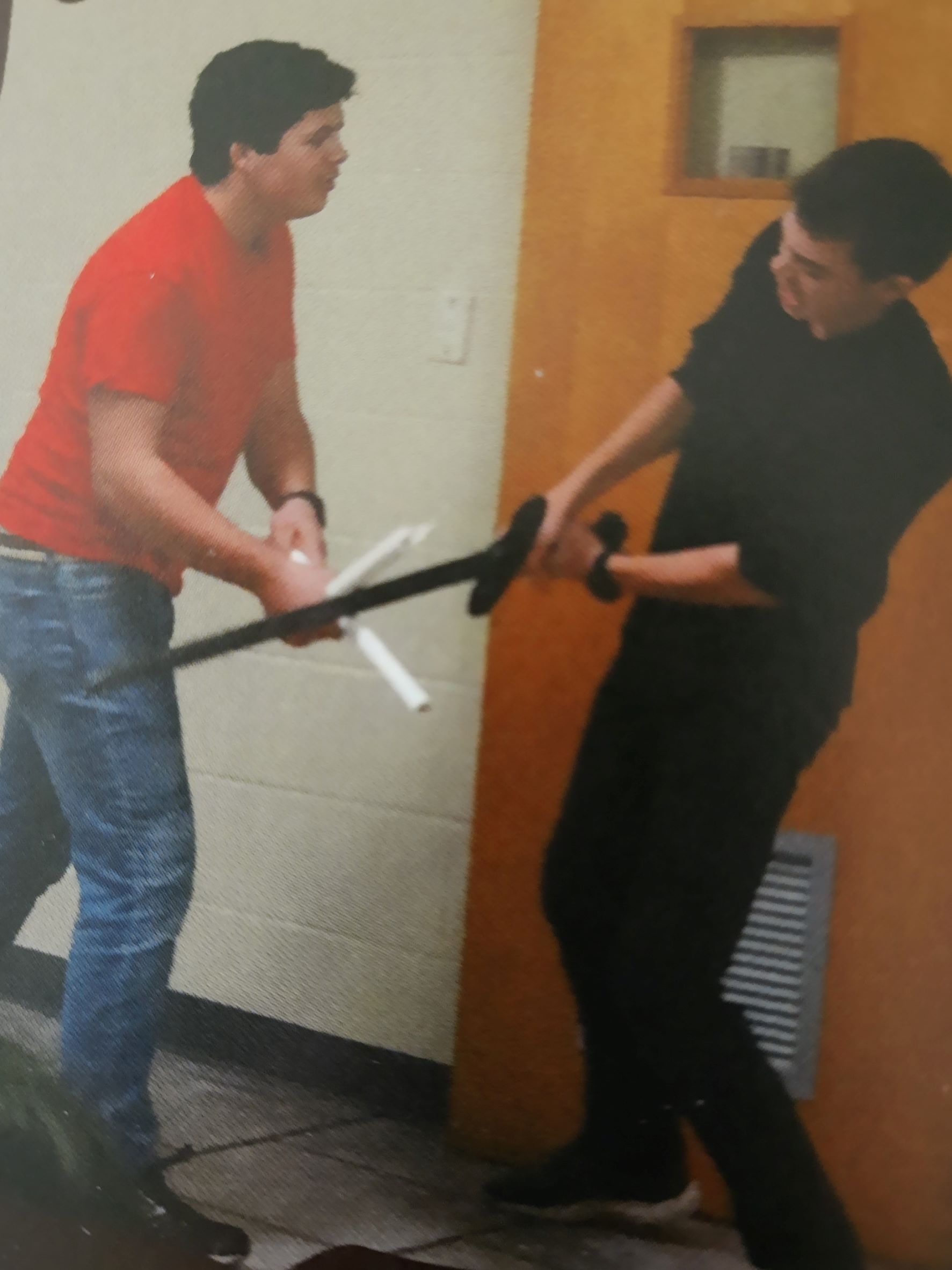
It just goes to show that if they want it badly enough, they will find a way to make time for it. Being creative and working as a team often gives kids the motivation to put in the work to make something awesome!
Another option we had for our students when studying Shakespeare was to put a character on trial. As students read the play during the allotted time each week, we would discuss it in class and they would work as a team – either prosecution or defense – to write witness statements and create questions and a case from the details of the play we were reading (most of this was worked on outside of our one day a week class as their homework.)
Each year most students thought they wouldn’t like this option because they thought it would take too much time and they wouldn’t enjoy it; only to find out they absolutely LOVED IT! There is so much creativity that goes into developing the characters that go on the witness stand. Each witness has to think through how their character thinks and acts and really know what is said in the play to know how to answer questions from not only the prosecution but also the defense. One side is rehearsed; the other is adlibbed right on the stand depending what side the witness is on. It’s incredible to see them put it all together and wonderful how they understand so much more about the story because they worked on this mock trial and didn’t just read the play.
Working on a mock trial develops CRITICAL THINKING SKILLS and helps with DEBATE SKILLS as the attorneys write up their opening statements, ask the witnesses questions, and create their closing arguments as the trial is presented.
If you only have one semester, choose one of these options:
drama game curriculum to learn acting skills then perform a short play
perform the play from the mock trial curriculum, then present the case
If you have two semesters, choose one of these options:
spread out the drama game curriculum and play into two semesters for more rehearsal and preparation time for the play
drama game curriculum, mock trial curriculum, perform a play
Drama games can take up the full class time as presented in Places Everyone! or it can be a warm-up before diving into rehearsals, writing a play or mock trial preparation. Drama Bundles are a great way to get all you need for a school year of Drama!
If you don’t have time for a separate drama class, then fit drama into your homeschool by adding it to one of the subjects you're already doing. Drama is a great way to add fun to what your students are studying, but fun isn’t the only thing they will gain from their experiences. They can learn important skills helpful to every high school student:
Critical thinking skills
Writing skills
Presentation skills
Debate skills
Teamwork
Leadership skills
You can check out all our plays and drama curriculum for more ideas and save with Drama Bundles!
If you have younger students, you can read how to teach drama to elementary students or middle school students by clicking the separate links.
Want to make life easier and be the first to know when the next blog is posted? Sign up below for our email newsletter to get the latest news.
Thanks for joining us!
Danielle at homeschooldrama.com
It's easy to have our products in your hands with these downloadable PDFs!